How Much Do Stock Photographers Actually Make in 2026? A $50,000, Four-Year Breakdown
We joined Shutterstock in March 2022. Four years, 8,465 files, and seven platforms later, we’ve earned $50,301 — 99% of it from just three platforms. Here’s the honest breakdown of which stock sites still pay in 2026, which don’t, and whether it’s worth starting today.
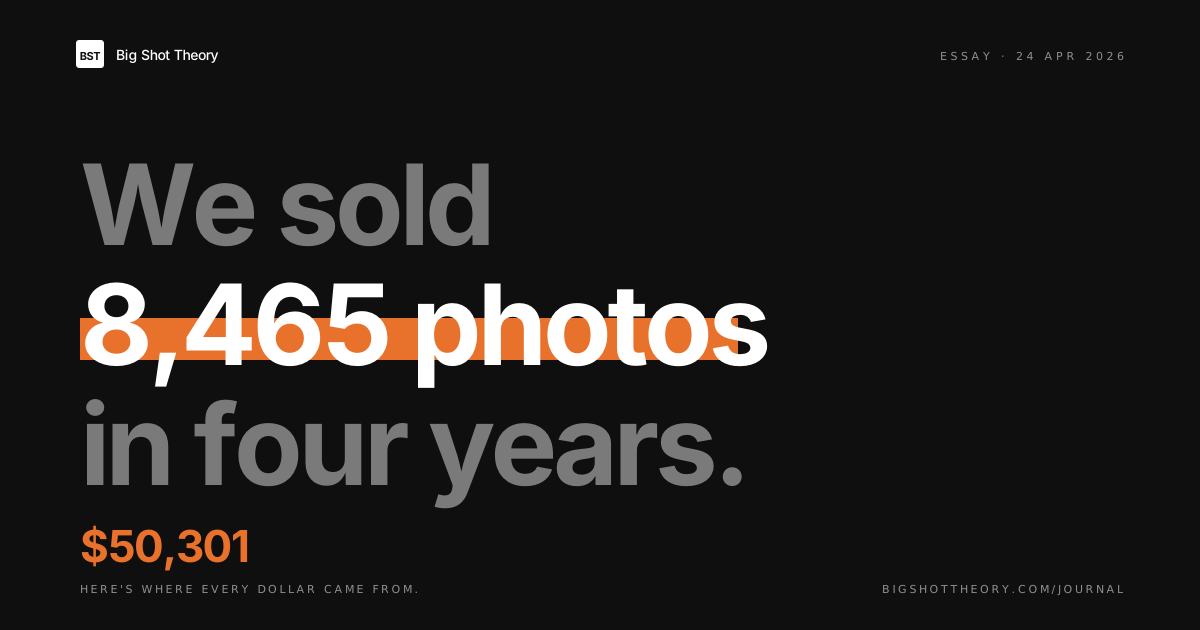
Stock photography income in 2026 isn't what it was in 2020 — and the numbers most contributors see on forums are either cherry-picked success stories or outdated. So here's ours, straight from seven real contributor dashboards: $50,301 earned across four years and 8,465 uploaded files, with the exact per-platform breakdown, the three platforms that paid us 99% of that total, and a frank answer to whether it's still worth starting today.
If you've ever asked "how much do stock photographers actually make in 2026?" — this is what the honest answer looks like for two photographers uploading consistently from Slovakia since March 2022.
The short answer: what two photographers earned in four years on stock
- Total lifetime earnings across 7 platforms: $50,301
- Team average per year: $12,575
- Per person, per month (team average): $524
- Files uploaded: 8,465
- Downloads served: 18,492
- Revenue per download: $2.72
- Revenue per unique file, lifetime: $5.94
- Platforms generating over 99% of revenue: 3 (Adobe Stock, Shutterstock, iStock)
Stock photography is a real side income in 2026. It is not, anymore, a path to quitting your day job.
Who we are and how we shoot stock
We're Big Shot Theory — a small European photo and video studio based in Slovakia. We licence a joint stock portfolio through seven agencies, shoot when light is good and real life allows, and don't use generative AI. No studio full of models on retainer, no team of twenty.
We started contributing to Shutterstock on 3 March 2022 as an experiment with a single question: can you actually make meaningful money from stock photography? Four years later, the numbers you're about to read are our answer.
Platform-by-platform stock photography earnings, ranked by what they paid us
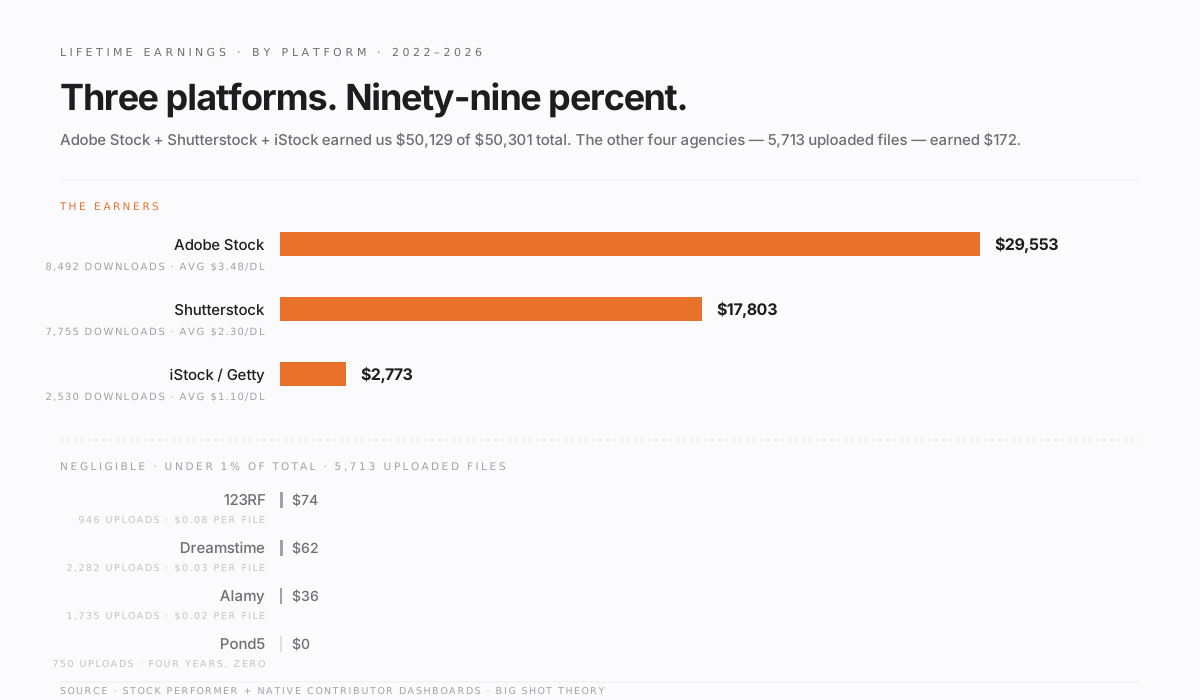
The chart above is the whole story in one image. Three platforms paid us $50,129 over four years. Four platforms paid us $172. Everything else is commentary.
1. Adobe Stock — $29,553 in four years (our #1 platform)
Adobe Stock is unambiguously our best-earning stock platform. Across 8,492 lifetime downloads, it's paid us $29,553 — roughly 59% of our total stock income from a single site.
What we like about Adobe Stock contributor earnings:
- Royalty rates are reasonable. We average ~$3.50 per photo download — roughly double Shutterstock's per-download rate.
- The review process is strict but fair. Rejections usually carry a reason we can act on.
- Search rewards quality and recency more predictably than competitors.
- Premium buyouts are a real upside. Nobody talks about this: Adobe occasionally buys specific files for the Adobe Stock Premium Collection or licenses batches to enterprise / AI-training partners at bonus rates. In one good year (2024), we received over $4,000 in premium and bonus payments on top of standard royalties. It varies year to year — it depends entirely on which of your assets Adobe chooses to promote — but when it hits, it meaningfully boosts annual totals.
- Per-download earnings have trended down through 2025 and 2026, matching industry-wide declines.
- Top-contributor position matters less than expected. We're ranked 16,800th all-time, and from roughly rank 1,000 downward, everyone competes in a flat market.
2. Shutterstock — $17,803 in four years (still #2, but noticeably declining)
Shutterstock is where we started. It's our longest-running contributor account and our second-best earner: $17,803 across 7,755 licensed downloads on a 1,427-image portfolio (plus video).
The painful reality of Shutterstock earnings in 2026:
- Per-download earnings average ~$2.30 — about 65% of Adobe's rate.
- The 2020 and 2023 royalty-structure changes cut contributor pay meaningfully. We felt it in 2023, and we still feel it in 2026.
- Volume is high but low-value. We get steady downloads, but each one pays less than it should.
- Shutterstock's global buyer reach is unmatched. Files that barely sell on other platforms still tick over here.
- Video sells meaningfully better than stills, relative to competitors. Our video portfolio punches above its weight specifically on Shutterstock — browse our videos for the kind of footage that performs.
3. iStock / Getty Images — $2,773 in four years (the slow starter)
iStock is the platform that took two full years to start paying. We joined in 2022 but didn't see meaningful revenue until late 2023. Now it pulls a steady $100–$200 per month.
Why it works (eventually):
- Getty's enterprise customer base pays higher per-license rates than retail stock.
- Once a file is indexed and ranking, it continues earning without maintenance.
- Rejection rates are brutal, but accepted files earn more per download than on Shutterstock.
- Non-exclusive contributors sit at the lowest royalty tier (15–20%).
- Upload interface is worse than Adobe's or Shutterstock's.
- Contributor support is essentially non-existent.
The platforms not worth your time: 123RF, Dreamstime, Alamy, Pond5
Here we have to be blunt. The numbers over four years speak for themselves:
- 123RF: $74 earned · 237 downloads · 946 files uploaded · $0.08 per upload, lifetime.
- Dreamstime: $62 earned · 62 downloads · 2,282 files uploaded · $0.03 per upload, lifetime. We uploaded over 2,000 files and got 62 downloads. One licensed download per 37 uploads.
- Alamy: $36 earned · 8 downloads · 1,735 files uploaded · $0.02 per upload, lifetime. Alamy was great a decade ago. It is not, at least not for our style of work.
- Pond5: $0 earned · 0 downloads · 750 files uploaded. Four years, zero dollars.
Verdict: in 2026 we're deprecating uploads to all four. Adobe + Shutterstock + iStock will continue getting our attention. The rest were effectively a four-year tuition bill.
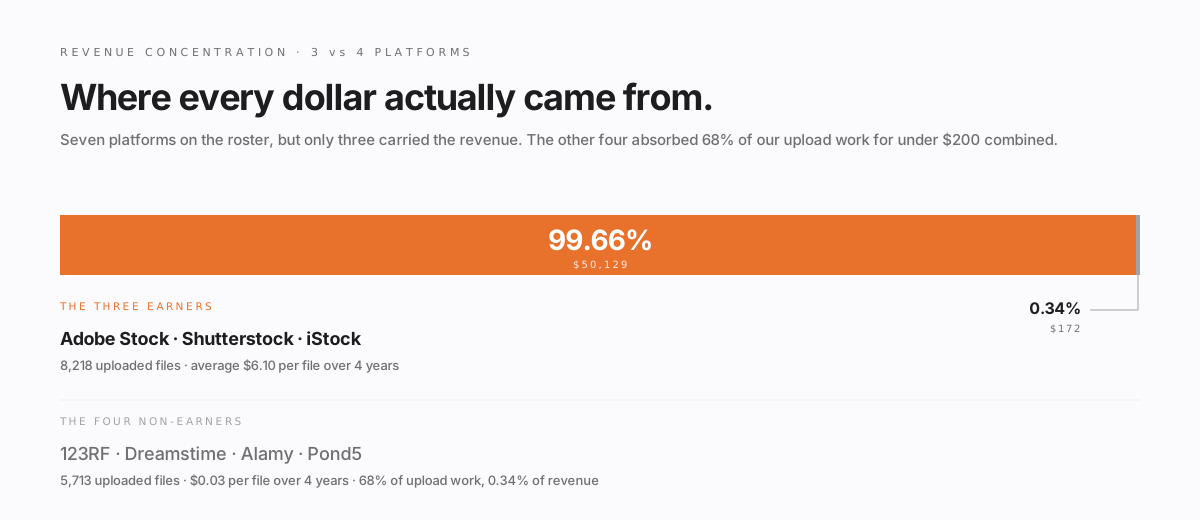
The concentration in the chart above is the single most important thing to internalise as a stock contributor in 2026. Pick your three platforms deliberately. Skip the rest.
Why stock photography earnings dropped 40-50% between 2024 and 2026
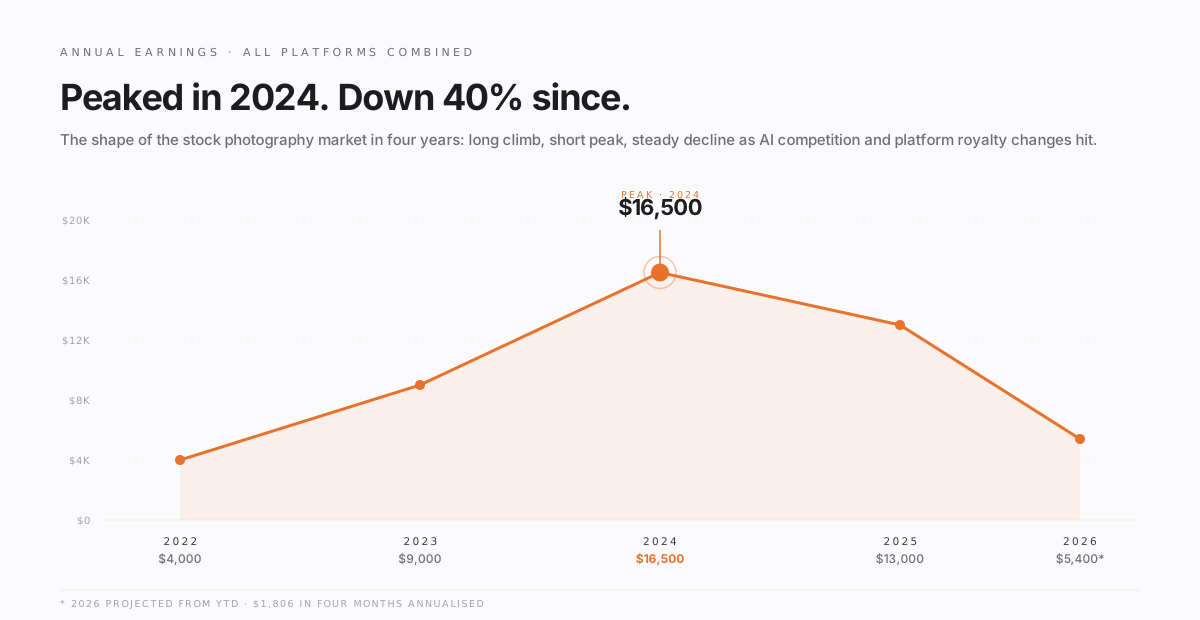
We peaked in late 2024. Our best single month across all platforms was roughly $1,800. 2026 is pacing at about half of that — and we're not alone. Across the contributor community, every forum thread and every YouTube breakdown shows the same shape: a long climb through 2023-2024, a ceiling in late 2024, and a sustained decline through 2025-2026.
Three forces hit at once:
1. AI-generated stock flooded the market. Every major platform added millions of generative images between 2023 and 2025. More inventory, same number of buyers, lower per-download royalties.
2. Shutterstock royalty algorithm changes. The 2020 tier restructure and 2023 adjustments reduced per-download pay for non-Level-5 contributors. Most of us never break into the top tier.
3. Buyer behaviour shifted to subscriptions and generative credits. Subscription seats and AI-generation bundles replaced many one-off licenses, and contributor share per subscription download went down, not up.
None of that reverses. 2024 isn't coming back. The new normal in 2026 simply pays less per download, at higher volumes, across a more crowded library.
Is stock photography still worth it in 2026? An honest answer
Depends on what you're comparing it to.
If you're asking "can I replace my full-time income with stock?" — no. Not in 2026, not unless you're producing at industrial scale (500+ new uploads per month) with professional gear, a pipeline of signed model releases, and genuinely commercial-ready concepts.
If you're asking "can I build a passive income stream on top of photography I'm already doing?" — yes. $500–$1,500 per month per person is realistic after two to three years of consistent uploads to the right platforms. Ours is a compounding side income, not a primary one.
If you're asking "should I start today if I'm not already a photographer?" — probably not. The bar has moved. Casual shooters with smartphone files will struggle to rise above the AI-generated noise. You need craft, styling, proper legal model releases, and patience. Twelve to eighteen months of uploading with no meaningful income is the default starting experience now.
What we'd do differently if we started stock photography in 2026
1. Skip 123RF, Dreamstime, Alamy, Pond5 entirely. Three platforms only: Adobe, Shutterstock, iStock.
2. Focus on video earlier. Our highest per-download rates come from video, not stills. We undershot video production for the first two years and left money on the table.
3. Shoot for specificity, not generality. "Woman smiling at laptop" is fully oversaturated — generative AI delivers infinite such images. "Slovak couple in a modern kitchen, laptop open to a budgeting spreadsheet in their own language" is indexable and wins searches.
4. Upload in batches of 50+ on the same theme. Platform algorithms reward thematic consistency. Single scattered uploads get buried.
5. Budget for 12–18 months of no meaningful income. Year one is portfolio building. Returns compound from year two onwards.
Frequently asked questions about stock photography income
How much can you realistically earn from stock photography in 2026?
Expect $0 for the first 6–12 months while you build a portfolio. From year two onwards, consistent contributors with 500+ files on Adobe Stock + Shutterstock typically report $100–$500 per month. Professional contributors with 2,000–5,000 files and video in the mix report $500–$3,000 per month. Six-figure stock incomes still exist but are almost exclusively top-1,000 contributors on Adobe with tens of thousands of files and full-time production teams.
Which stock photography platform pays contributors the most in 2026?
Based on our four-year data: Adobe Stock. Per-download rates average roughly double what Shutterstock pays, the review process is fairer, and Adobe's premium / enterprise programs can add meaningful bonus income in good years. Shutterstock is still a solid #2 for reach and volume. iStock pays well per download but takes two years to ramp.
Do stock photos still sell now that generative AI exists?
Yes — but the kind that sells has shifted. Generic, easily replicable imagery ("handshake in boardroom", "lightbulb with idea") competes with unlimited AI output and is rapidly losing value. Authentic, location-specific, culturally specific, and people-in-genuine-situations imagery is harder for AI to replicate convincingly and continues to sell. Video still significantly outperforms stills per download, since AI video generation at commercial quality remains expensive and imperfect in 2026.
How long before stock photography becomes profitable?
In our experience, 18–24 months of consistent uploading before revenue becomes meaningful on any single platform. iStock took us the longest — nearly two years — to start paying. Adobe Stock ramped the fastest. Nobody makes meaningful money in month one.
What's the best stock platform to start with as a new contributor?
Start with Adobe Stock first. Highest per-download rates, clearest review feedback, strongest upside from premium programs. Add Shutterstock in month 2–3 for reach. Consider iStock later once you have a few hundred files ready to upload — the two-year ramp starts from the first upload, so earlier is better, but not before you have a minimum viable portfolio.
Final scoreboard: four years of stock photography earnings
- Total lifetime earnings, all platforms: $50,301
- Team average per year: $12,575
- Per person, per month (team average): $524
- Files uploaded across all platforms: 8,465
- Downloads served: 18,492
- Revenue per download: $2.72
- Revenue per unique file, lifetime: $5.94
- Platforms earning over 99% of revenue: Adobe Stock, Shutterstock, iStock
- Platforms earning under 1% combined: 123RF, Dreamstime, Alamy, Pond5
If you're already in the stock business, know the numbers. If you're considering it, know them even better.
---
Big Shot Theory is a boutique European photo and video studio. We don't do sponsored posts or platform referral links — these numbers are our own, published so the next contributor doesn't spend four years learning what we learned. See our own stock licensing for how we price our work outside the agencies.